This post marks ten years since I started this blog. Kinda wild. It’s been intermittent for most of those years and I’d say about half of the material is just notes I took because (back in the day) the easiest way to find a how-to later was to google it even if you were finding your own blog!
I should probably use a different wordpress theme… who uses black on white anymore?
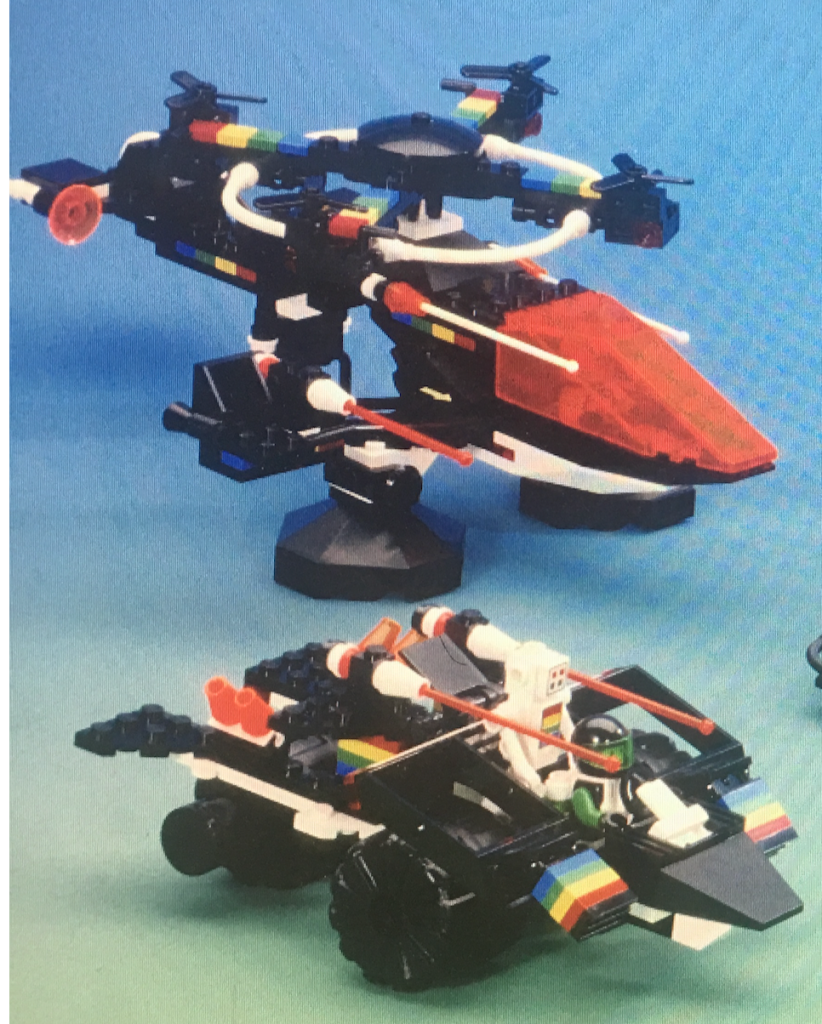
Bjarne Tveskov, the LEGO designer of the (in?) famous Meteor Monitor (as well as numerous other sets), one of the most confusing Space sets for theme-watchers, apparently has a blog and explains its origins. He also includes some concept ships that I’ve never seen shared anywhere else for what he jokingly calls “spectron”, a ZX-spectrum inspired iteration of what became BlackTron II. In these concepts I see the germs of the Warp Wing Fighter (above) and Particle Ionizer (below.) Maybe even the rover from Space Station Zenon. Not to mention the orange and white of Ice Planet.
A project to collect and share the types of tiled backgrounds you used to see on Web 1.0 sites. Exactly what you need for your Neocities site.
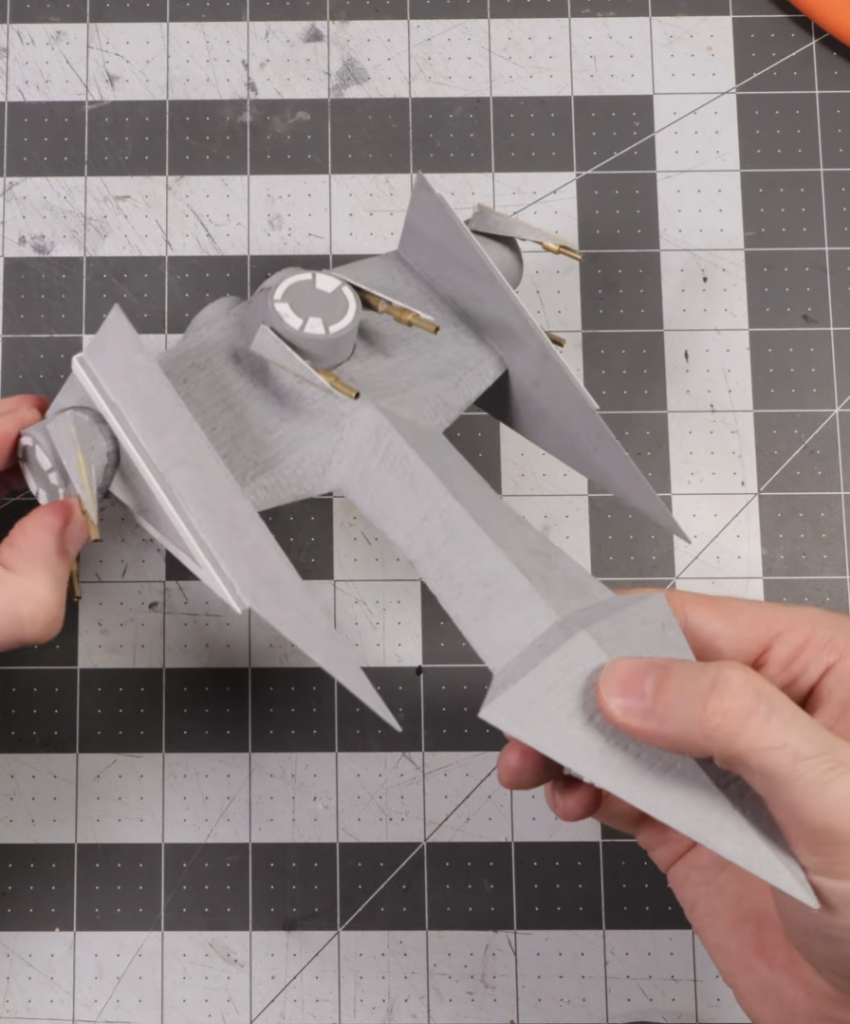
For crafting fans out there, this is an impressive build. Because the models for the EV Override ships were released and eventually converted into blender files, anyone can 3d print them to make physical versions. But Sublight Drive Crafts didn’t stop there, they did the hard part and finished the model to an amazing degree. There was discussion on the discord where we begged them to photograph the model to make a rotation sprite out of it! (When I was very young, I thought that’s how in game graphics were made!)
Gamestop declared that it wanted to buy venerable online marketplace Ebay, and CNBC tried to figure out why. The CEO didn’t really help matters and appeared to be under the influence during the discussion. The comedic timing is priceless.
Songwriting (donaldsonworkshop.com)
I think I finally found the real idiots’ guide the song writing. Very concise.
A piece on a particular music theory trick Trent uses.
One of those stories that just gets worse the more you read. Not only did someone forget to make the repo private. Not only did they commit sensitive keys to a public repo. But when warned privately about it, they didn’t do anything!
A rather nice breakdown of the history (historiography?) of the lore of a particular 40k faction. I was going to write something like this, but it wasn’t going to be nearly as good, so I’m glad someone else did it.
Searchable DB of old MTG card comments (from the “gatherer” site.) On the off chance that you want to know what’s up with a particular Magic card, this is a place to look.
I found these tracks fascinating back in the day. Very cool effort. Interesting to see so much is from Sonic Foundry.
Charming relic of Web 2.0 forum shenanigans. An illustrated guide to different types of posters.
The slightly larger size of web badge. Complete with links to a treasure trove of these, the original digital collectable.
Short radio piece on the Guillows company. All this time I’ve been pronouncing it like Gull (as in seagull) but it actually rhymes with “willow.”
Surprised I never ran across some of these before. Each synth listed includes demos you can listen to which is really helpful when compared to more mainstream sites like KVR.
Plague Music (kavarimusic.bandcamp.com)
Finally: industrial IDM. And dubstep. And lots of screaming.
AI Crisis
“I am at a point where I am tired of hearing about it every other day,” he lamented. “I just want my salary and to not lose my sanity.”
The un-website-like look of this page is striking. Here is someone who really cares about web design. They also apparently care about Mozilla even as they are leaving. This comes in the wake of some unpopular decisions by Mozilla management and I think other FOSS folks ought to take notice.
“Google Zero” is a concept online publishers have used for a while, but now we have a concrete date: this summer, Google plans to stop linking you to people when you search for stuff. This makes perverse sense on some level, since those sites are getting ad dollars that Google could be getting instead. The incentive for actually doing the work of publishing information to the open web is about to nosedive, and it’s not clear where Google will get the information to drive its summaries when they starve out the folks actually generating the data they summarize. I’m hoping that people like the web more than they like Google and will reject this, and perhaps the folly of killing the source of all that data they want to sell you might become apparent, but I’m mildly pessimistic.
See also: this response which I think sums up the reasonable take well.
A great discussion of why Zig isn’t accepting AI contributions that generalizes to any type of community cultivation. It looks like I wasn’t the only one to notice this reasoning, since Godot Project took a similar position. I’m hoping this becomes the norm for community FOSS projects. Say Godot:
Reviewing PRs is already tedious work, but it is rewarding because reviewers generally feel that their efforts are contributing to educating a new contributor (who may become a future maintainer/reviewer). If your feedback on PRs is just being absorbed by a machine and not going towards mentoring a potential future maintainer, it becomes much harder to justify spending your free time on PR review.
But another section, one I didn’t see in Zig’s post, is something I think everyone should consider making their own policy:
No AI-generated text in human-to-human communication
When our maintainers volunteer their time to review your issue, PR, or proposal, they do not want to talk to a machine. This is a basic principle of respect.
Watch perennial Dawkins gadfly Rebecca Watson take a victory lap after Dawkins humiliated himself with an article where he got oneshotted by Claude.
My relationship with the software is intimate, almost as if it were an extra limb. I don’t think about what I’m doing when I use it. All of Vim’s modes and keybindings are deeply ingrained in my muscle memory. Using it just feels like my thoughts flowing from my head, into my fingers, into a Vim-shaped extension of my body, and out into the world.
But there’s a problem
I don’t think it’s cute that someone vibe coded “battleship” in VimScript. I think it’s more important that we stop collectively pretending that we don’t understand how awful all of this is. I don’t want to use software which has slop in it.
So he’s announced a fork, “Vim Classic.”