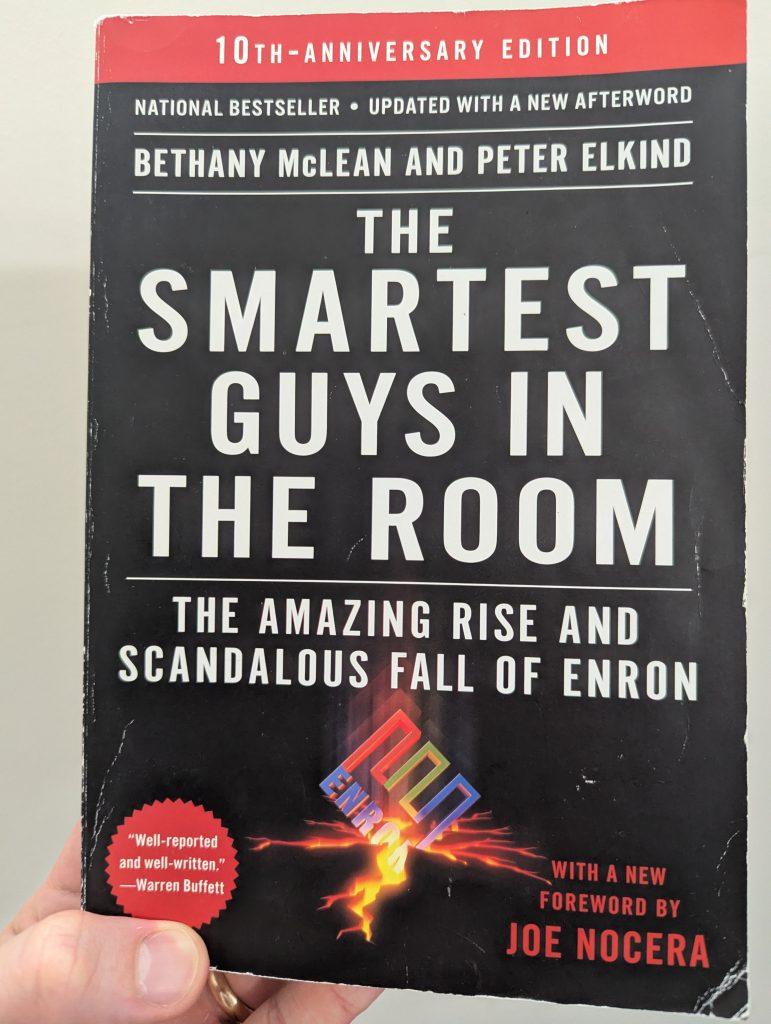
Like the story of a plane crash or bridge collapse you know what’s going to happen. Gravity is going to win in the end, and so it is with Enron. A company that tried to defy the laws of thermodynamics and conjure money from thin air with a sort of accounting perpetual motion machine. It’s an old story, over twenty five years now, but the details of the collapse still hold fascination. And there’s a bit more catharsis involved when you’re rooting for failure then when you are rooting for the pilots to land the plane against all odds in an episode of Mayday.
There’s another compelling reason to read this story in the spring of 2026 though. The inescapable drumbeat of AI calls to mind the story of Enron, so I thought it made sense to go over the history. I’m not going to write my own version of an Ed Zitron article, because he’s already done it, better than I could have. I planned on going through everything in the book and linking it to specific articles, but I don’t think that’s really needed or particularly original. So I’ll leave you with the impression of reading it: it’s well paced, well written, and contains a great amount of flavor-of-the-time, something I always look for when I chase nostalgia. They make the financial shenanigans underpinning Enron’s rampant fraud in a way comprehensible to non-accountants. They have a keen sense for when a sentence is going to land with an audible thud for the reader and structure their prose to deliver maximum impact. I have seen a lot of business literature and it rarely reaches this level of craft.
