Lego Space 1978-1992 (Tim Johnson, 2023)

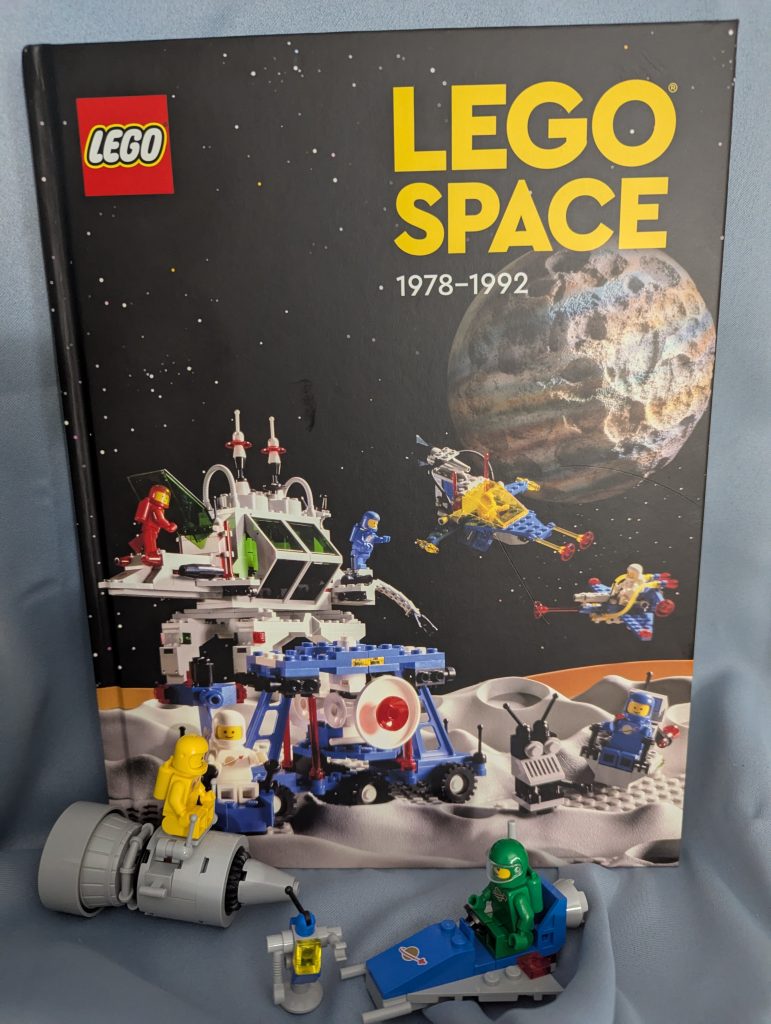
The cover of the book with some Lego characters added for flavor.

Apparently I am the coffee table book review guy now. I hesitated to pick this one up because I’d long ago scrutinized old catalogs and bricklink pages to learn about these old sets (and built a few of them even) so just seeing pictures wasn’t going to be revelatory, but I wanted to see what it had to offer.

Is the title appropriate?

My main complaint about this book is that it’s not quite what it says on the cover. It’s really three things:

  • Light biography of Jens Nygaard Knudson including behind the scenes information about Lego’s process.
  • An illustrated tour through the Space sets designed during his era with discussions especially about the elements and how they’re used.
  • A fanfic illustrating the type of things one might imagine while playing with lego sets.

The last item isn’t very engaging and I skipped most of it. It’s the type of thing that’s extremely fun to write and not necessarily what I want to read. Maybe there’s some larger story that emerges but the ones I did read were just vignettes. I don’t want to throw too much shade on a project clearly made with love.

The second item has some gems about pieces and is an interesting lens to look through but gets repetitive as the sets themselves get, well, repetitive. At times it felt like an exercise in trying to use as much aircraft jargon as possible or squeeze some sort of interest out of the third little seat with wings scooter vehicle we’ve seen. Reading that the rover is blue next to a photograph of a blue rover isn’t a great use of time. But don’t get me wrong, ‘this element was originally made for pirate ships’ is the type of interesting Lego lore I love. I really would have appreciated if the stat blocks listed the set’s designer though.

The the first, then, is the meat for the readers. It includes interviews with Lego employees from the era and other background color. What era you might ask? Knudsen’s era. What are they asked about? About the process yes, but also about Knudsen. I think a more appropriate title would have been “Lego Space: the Knudsen years.”

The Text

I’m going to focus on that piece. The Juice of this book, so to speak, is information about the creative work behind Space. But it’s also where I have the biggest bone to pick.

There’s interesting information on offer! Niels Milan Pederson says that he originally pushed for a Jules Verne 20000 leagues inspired Steampunk theme and that some of it was recycled into Aquazone (p28). Apparently Aquazone was designed in ’91 and ready to go before launching in ’95 without changes (p194) It should be noted that he sort of got his wish with the Stingrays which, despite the use of neon, have a fair bit of steampunk DNA with their browns and brassy prints.
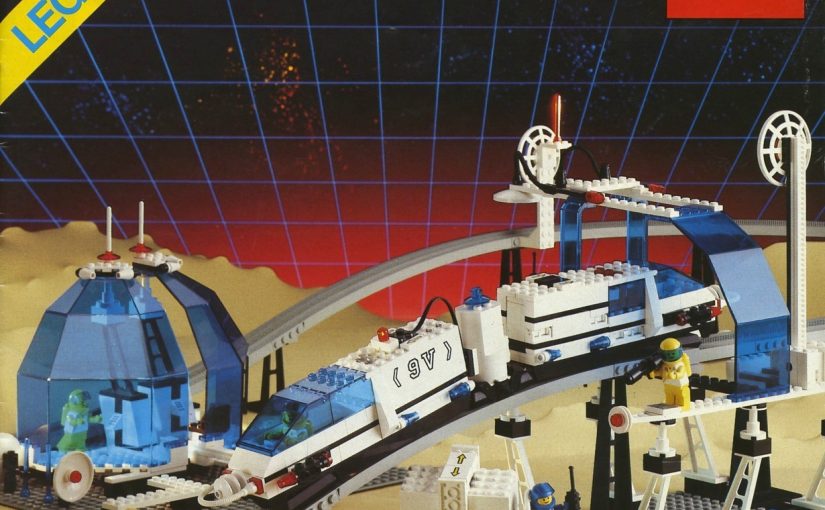
The information that the famous light grid was an in-camera practical effect using converging wires to achieve the perspective look is really interesting and there’s definitely a magic to seeing how it was done.

Some of the the concepts are already well known having been printed in a highly recommended Brick Journal article a decade ago. Lots of M tron concepts on p155 and some amazing never before seen concepts on p156 and 157. And the fact that half of the concept shots are already known is a symptom: the era this book focuses on has been covered extensively in the past.

Is this enough juice to carry a whole book? I’m skeptical.

I still haven’t found my Lego Book
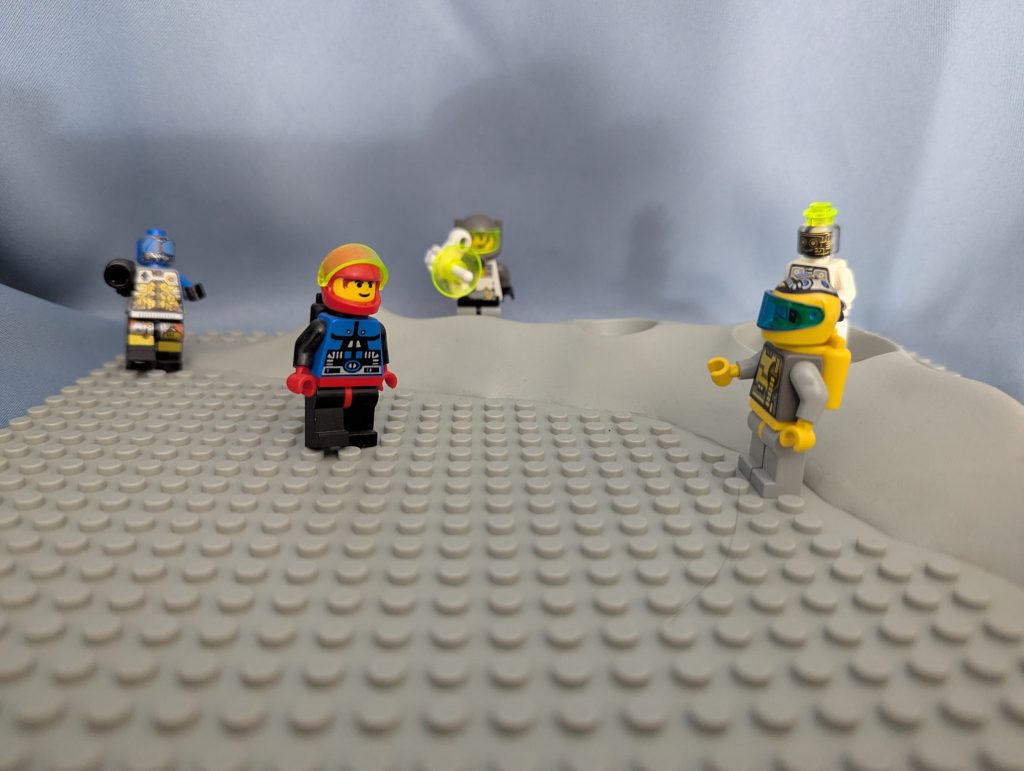
Several vintage Lego figures illustrating themes not covered in the book

For me personally, I’m once again left unsatisfied because they only covered the first half of Lego Space and neglected the more vibrant and colorful second half. None of the themes in that picture get treatment. Because it’s really about Knudson it for the most part misses the era of Space I find most interesting, 1990-2002. We get a (much appreciated) interview with Jørn Thomsen, but I want a full book devoted to his designs!
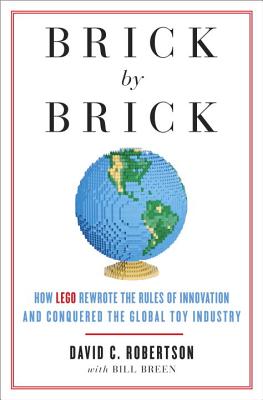
Brick By Brick (David C. Robertson with Bill Breen, 2013)

(Publisher’s image)

Authors David Robertson and Bill Breen have unfortunately achieved a dubious honor: they’ve taken an exciting human story and turned it into a stuffy suit.

Brick By Brick details the critical years of The LEGO Group (herafter TLG) as it lost its way, almost went bankrupt, and managed to pull off a feat of business alchemy by becoming (now) the biggest toy company in the world. As a (kid) fan of Lego during that era, I remember watching this from the outside; the Ploughman years where TLG made famous mistakes like Galidor and soaring experiments like Mindstorms are part of the contours of my memory. The inside baseball view was fun, and I’d recommend reading the book if you’re really into that sort of thing, but it’s a lot of book for a few nuggets.

It’s not written as a history, it’s written as a guide for business “innovators,” and as such object lessons sometimes crowd out the finer points. I recognize that I’m not the target audience for the book, and that it’s not the book’s fault that it’s not everything I want it to be. But I can only react to it the way I reacted, so let’s check it out!

Character based themes were nothing new

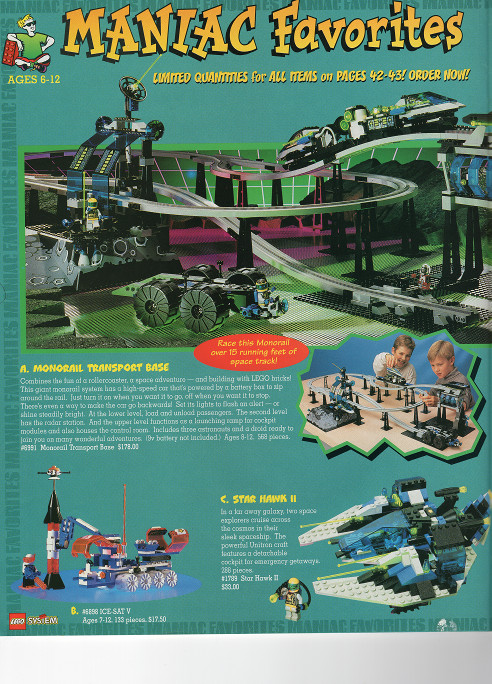
In Breen & Robertson’s telling, you would be forgiven for thinking that Bionicle was the first time TLG had shipped a theme based on original characters.1 This is plainly incorrect though. We got lore for System themes going way back; it just wasn’t taken seriously early on, see this section from a 1996 Mania Magazine:

Does that support an action-packed space exploration theme? Would the target audience even get the joke that MST3k is a show featuring robots?

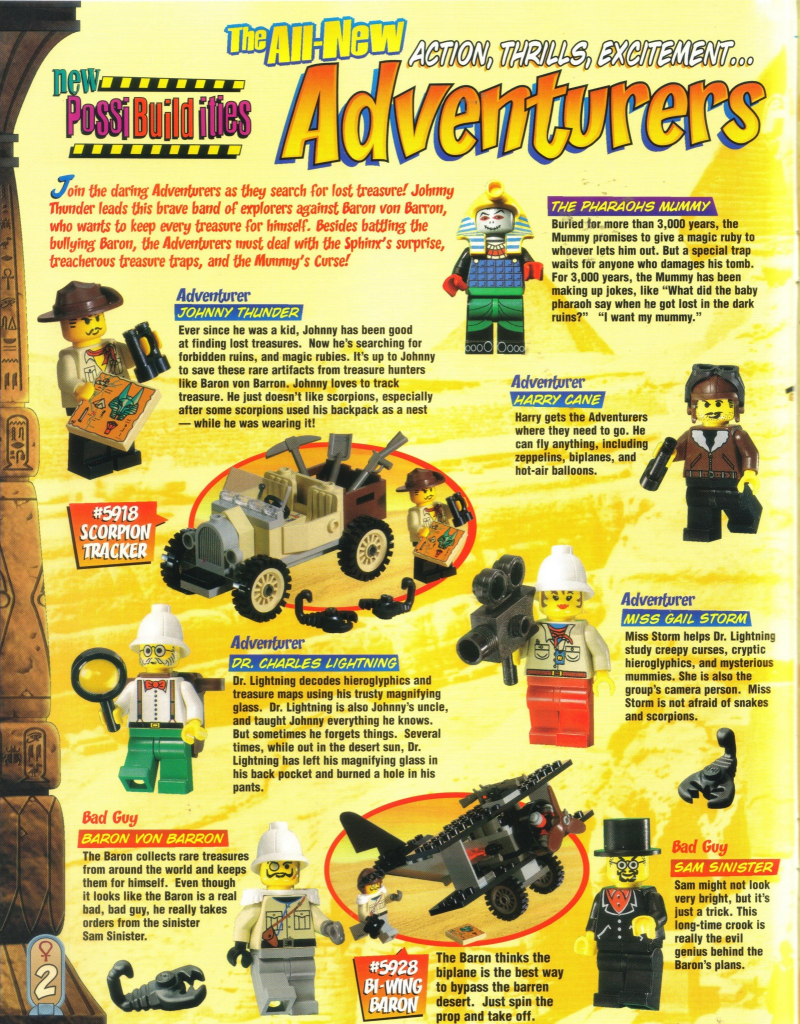
It got better though! Check this character bio page from a 1998 mag:

While clearly off-brand Indiana Jones, this takes the premise much more seriously and is trying to design characters. A few other themes from the Ploughman era went in a similar direction; some were even media tie-ins, like Rock Raiders which was launched with a strategy video game.

MindStorms also had a tie in web-game, Stormrunner, quite a high quality one as well; a full on RCX programming simulator in a world you could drive your robot around in to explore. They discussed MindStorms in detail in the book but don’t mention the connection-the online MindStorms game was created by none other than Templar Studios, the same folks that created the Mata Nui Online Game that would prove instrumental in selling Bionicle as a theme with a story.

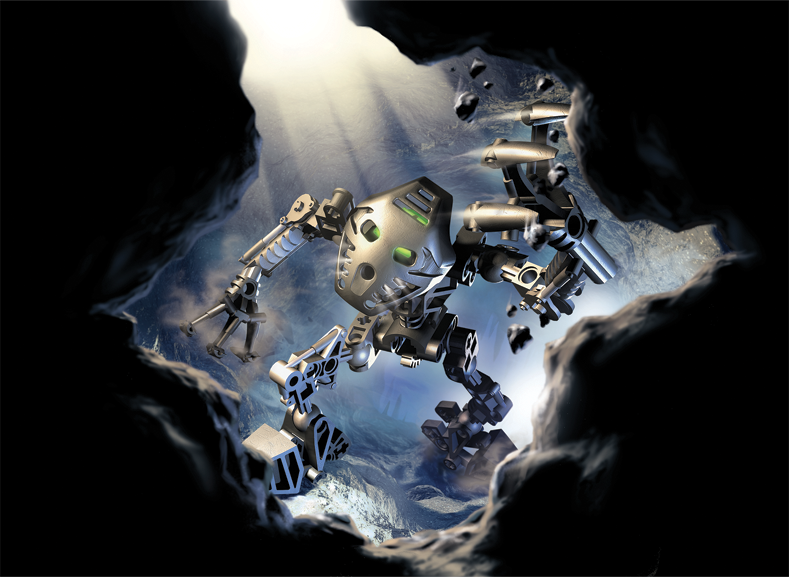
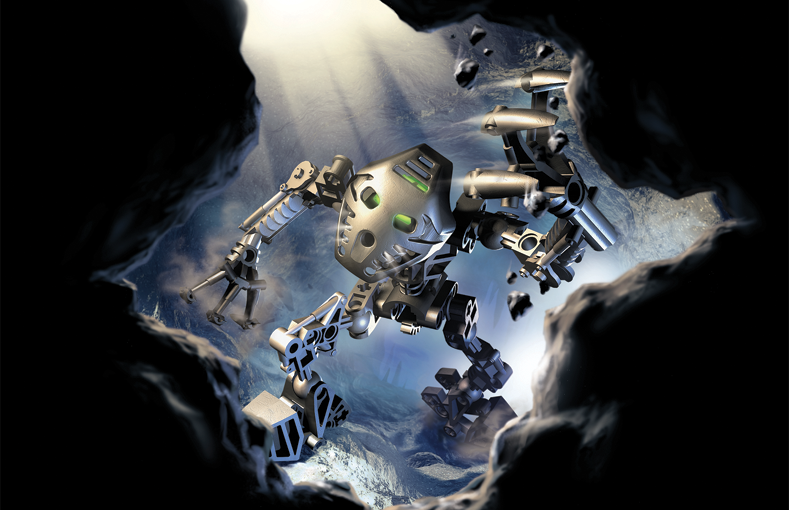
Another thing I think the book missed about Bionicle is that the art was just far better than what preceded it. Compare this to the above marketing materials, and while you’re at it, compare it to Toy Story 2, the best CGI most of us kids would have been exposed to in 2000:

Kids weren’t used to high quality CGI like this being used to market toys to them. Galador was just a (live action) guy, but Toa were these intricate, alien robots. Unique and memorable. Bionicle does get credit, but the focus is mostly on how innovative it is. But I think not enough credit is given for points on execution; it was just a much better put together marketing package than any theme had ever been treated to. The story was more coherent, the story was consistent (ish) across media, and the story was taken seriously, rather than used as an excuse to write dad jokes. If you were a genuine fan of System Themes, the Magazine blurbs sometimes felt like they were laughing at your expense… Bionicle never felt that way; Faber and co. were clearly huge fans of the material, hell Faber is still talking about it twenty years later! I’d say it was a confluence of factors-trying some of the same things and some new things, plus bringing the quality of the worldbuilding up to the obsessive quality of the bricks.

Nonetheless, Bionicle shouldn’t be seen solely as a unique moment for Lego, but also a progression from earlier attempts, a pulling together of all of the different things TLG had tried, especially during the zany Ploughman era.

Misunderstanding Minecraft

The chapter on Lego Universe unfortunately lacks depth on Lego’s history with gaming, and maybe gaming in general. I wish they’d tapped a seasoned games journo for this one rather than their kid who plays Minecraft. I suppose to be fair, Gaming was taken quite a bit less seriously ten years ago when Brick By Brick was written.

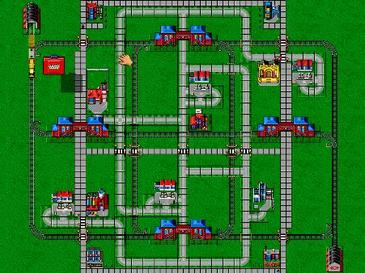
What they don’t seem to see is that Lego was no stranger to publishing games that promote a building play style. Lego Loco (Intelligent Games, 1998) was also an open ended sandbox game, a much gentler, challenge-free take on a sort of Sim City type of game, featuring lego minifigs and trains:

(Wikipedia)

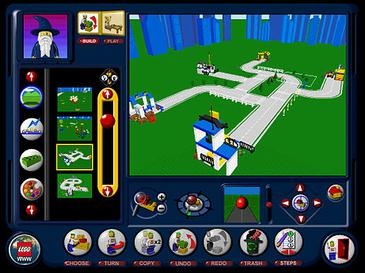
In the same year, TLG also published Lego Creator, an immersive 3d Lego building simulation featuring the ability to build lego models at minifig scale. It wasn’t exactly Minecraft, but it can be easily described in terms of Minecraft, it’s like Minecraft except:

(Wikipedia again)
  • You could build drivable vehicles
  • Static flat ground, no mining
  • Not voxel based; you could build with bricks of various shapes
  • No enemy npcs, threats or challenges; you just kinda build whatever you want with unlimited resources
  • Single player; no multiplayer

Apart from that, it was comparable to Minecraft, at least for its day. The sequels may have added some challenges, I never played them. But the prior art was clearly there. Had TLG chosen to develop along that path, it’s possible that they could have shipped something remarkably similar to Minecraft before Infiniminer, which inspired Minecraft, got off the ground. And I think it’s worth asking why and laying some blame on the inability for the culture of TLG to understand the industry, but I wish the book really engaged with that question instead of just lambasting the way they engaged with MMO producers in a fairly shallow way. I agree that perfectionism was the enemy, but I think that it was also a question of seeing kids MMOs like Toontown succeed massively and wanting to replicate that success, another subject not touched on.

The book I want someone to write

A book more focused on the Ploughman era specifically, with a deeper look at what TLG tried and when, when it worked and when it didn’t, and how the things that worked culminated in Bionicle and subsequent themes. I’d love to hear the inside story of TLG working essentially as a video game publisher, something Brick By Brick basically skated over! I want to know how we went from seemingly goofy after the fact ideas like Ann Droid to intentionally created stories like Johnny Thunder. This was clearly a gradual process, and one that’s as responsible for saving the company as a particular fire truck model was!

What I’m asking for, in other words, is a history of Lego Themes.

But how does it compare to The Lego Story

I gave both the same rating on Goodreads, but in retrospect, I enjoyed Anderson’s story a lot more. It also lacked a lot of theme-level coverage I crave, but it did attempt to tell a story and ground that story in research instead of fitting the narrative to instruct on some specific lesson (besides of course being a hagiography of Kjeld Kristiansen.) If you absolutely loved Anderson’s book you might find additional insight by comparing the two. If Anderson wasn’t for you, or if you were only mildly enthused, I’d give this one a pass.

Footnotes:

  1. Actually they do bring up Fabuland for some incomprehensible reason. I dunno.

LEGO Shop At Home Scans: 95-99

A while back, I was trying to find a specific Lego catalog that I’d looked at as a kid. However, when I tried to find the specific one I was looking for, I realized that very few of these catalogs from the 90s had been immortalized by the internet. However, many of them where on sale for reasonable prices (and Sabrina wanted a Scanner for old family Photos anyway) so I got to work.

? 1995

Holiday 1995

January 1996

Holiday 1996

Spring 1997

Summer 1997

Holiday 1997

January 1998

Spring 1998

Summer 1999

Fall 1999

The raw files are here on my archive.org account, if you find my (largely imagemagick-powered) PDFing of the files inadequate. If the PDFs appear small just zoom in, they’re about as high-res as they can be without creating artifacts on the screens I tried. I plan on also scanning the ones that I personally saved when I was a kid, and will post those here too.

And the specific catalog I was looking for? Turns out it was Holiday 1997. Twenty one years ago. The page I was looking for in particular turns out to be this one.