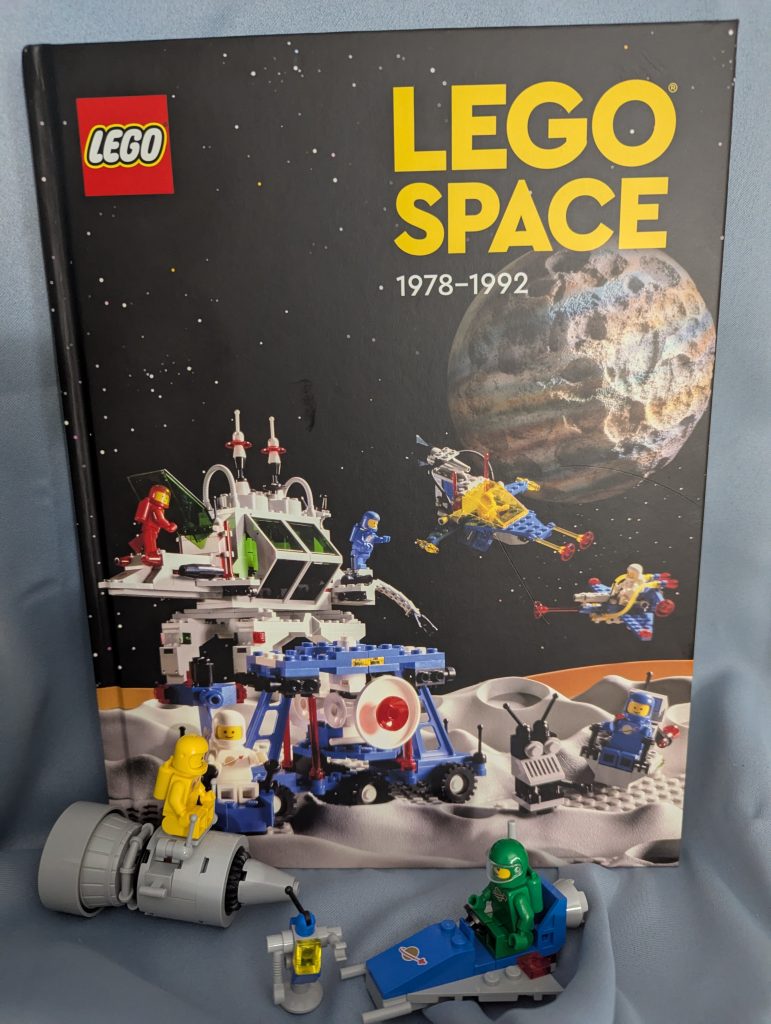
Apparently I am the coffee table book review guy now. I hesitated to pick this one up because I’d long ago scrutinized old catalogs and bricklink pages to learn about these old sets (and built a few of them even) so just seeing pictures wasn’t going to be revelatory, but I wanted to see what it had to offer.
Is the title appropriate?
My main complaint about this book is that it’s not quite what it says on the cover. It’s really three things:
- Light biography of Jens Nygaard Knudson including behind the scenes information about Lego’s process.
- An illustrated tour through the Space sets designed during his era with discussions especially about the elements and how they’re used.
- A fanfic illustrating the type of things one might imagine while playing with lego sets.
The last item isn’t very engaging and I skipped most of it. It’s the type of thing that’s extremely fun to write and not necessarily what I want to read. Maybe there’s some larger story that emerges but the ones I did read were just vignettes. I don’t want to throw too much shade on a project clearly made with love.
The second item has some gems about pieces and is an interesting lens to look through but gets repetitive as the sets themselves get, well, repetitive. At times it felt like an exercise in trying to use as much aircraft jargon as possible or squeeze some sort of interest out of the third little seat with wings scooter vehicle we’ve seen. Reading that the rover is blue next to a photograph of a blue rover isn’t a great use of time. But don’t get me wrong, ‘this element was originally made for pirate ships’ is the type of interesting Lego lore I love. I really would have appreciated if the stat blocks listed the set’s designer though.
The the first, then, is the meat for the readers. It includes interviews with Lego employees from the era and other background color. What era you might ask? Knudsen’s era. What are they asked about? About the process yes, but also about Knudsen. I think a more appropriate title would have been “Lego Space: the Knudsen years.”
The Text
I’m going to focus on that piece. The Juice of this book, so to speak, is information about the creative work behind Space. But it’s also where I have the biggest bone to pick.
There’s interesting information on offer! Niels Milan Pederson says that he originally pushed for a Jules Verne 20000 leagues inspired Steampunk theme and that some of it was recycled into Aquazone (p28). Apparently Aquazone was designed in ’91 and ready to go before launching in ’95 without changes (p194) It should be noted that he sort of got his wish with the Stingrays which, despite the use of neon, have a fair bit of steampunk DNA with their browns and brassy prints.
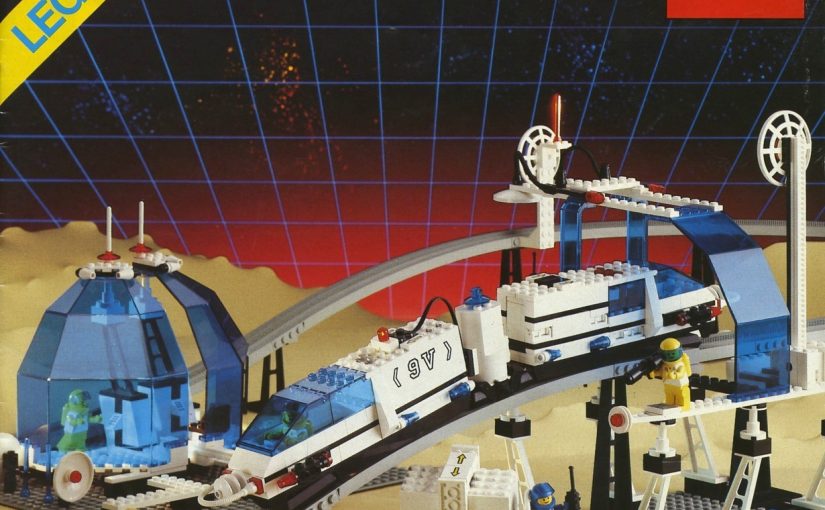
The information that the famous light grid was an in-camera practical effect using converging wires to achieve the perspective look is really interesting and there’s definitely a magic to seeing how it was done.
Some of the the concepts are already well known having been printed in a highly recommended Brick Journal article a decade ago. Lots of M tron concepts on p155 and some amazing never before seen concepts on p156 and 157. And the fact that half of the concept shots are already known is a symptom: the era this book focuses on has been covered extensively in the past.
Is this enough juice to carry a whole book? I’m skeptical.
I still haven’t found my Lego Book
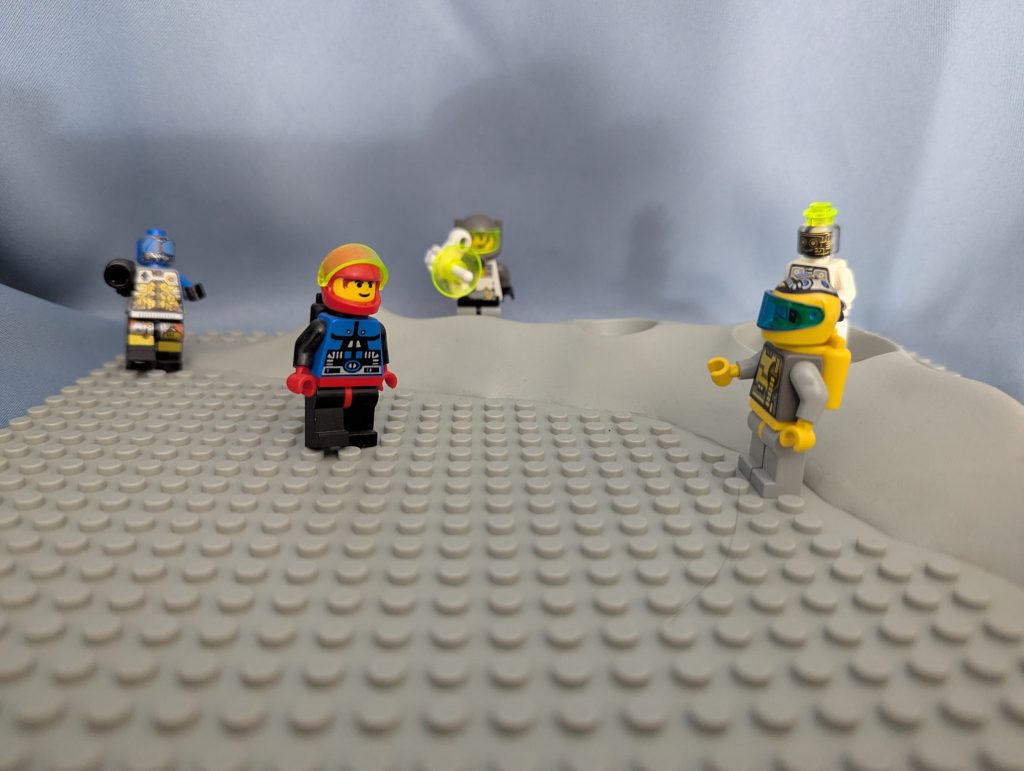
For me personally, I’m once again left unsatisfied because they only covered the first half of Lego Space and neglected the more vibrant and colorful second half. None of the themes in that picture get treatment. Because it’s really about Knudson it for the most part misses the era of Space I find most interesting, 1990-2002. We get a (much appreciated) interview with Jørn Thomsen, but I want a full book devoted to his designs!